


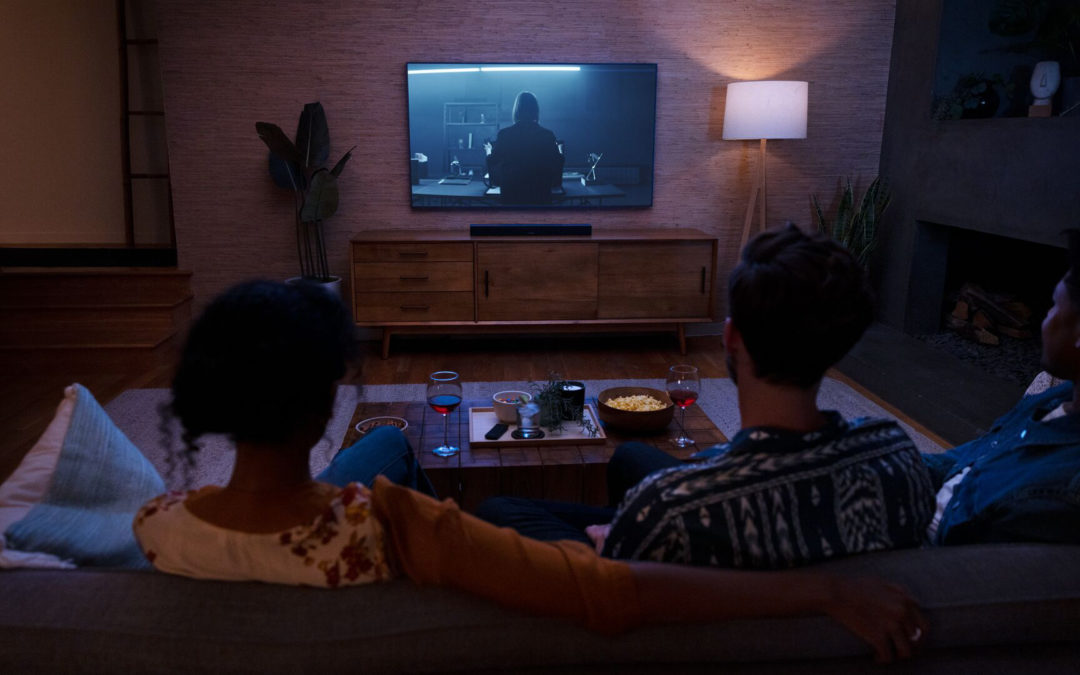
Upgrading your TV’s sound setup can completely change the way you experience movies, music, and games. Modern Smart TVs have beautiful displays—but their built-in speakers are often limited. Connecting external speakers or a soundbar is definitely worth it, since these speakers offer richer bass, clearer dialogue, and cinematic depth to every scene.
This guide will show you how to connect speakers, soundbars, and amplifiers to your Smart TV or monitor, whether your setup uses HDMI ARC, optical audio, or standard analog cables.
Understanding HDMI ARC and eARC
Before we begin, it’s important to understand what HDMI ARC (Audio Return Channel) is.
- HDMI ARC allows both video and audio to travel through a single HDMI cable.
- It eliminates the need for multiple wires and supports modern sound formats.
- eARC (Enhanced ARC) is a newer version that supports higher bandwidth audio like Dolby Atmos or DTS:X.
Most current Smart TVs and Bose soundbars support HDMI ARC or eARC, making it the simplest and highest-quality connection option available.
How to Connect a Soundbar to Your Smart TV
Option 1: Using HDMI ARC (Recommended)
- Locate the HDMI ARC or eARC port on your TV—it’s usually labeled “HDMI ARC.”
- Plug one end of the HDMI cable into your soundbar’s HDMI (ARC/eARC) port.
- Plug the other end into your TV’s HDMI ARC port.
- On your TV, enable HDMI-CEC and ARC under Audio Settings.
- Change the TV’s sound output to External Speaker or HDMI ARC.
- Play a video to confirm the connection.
For other brands: Follow the same steps—HDMI ARC setup works universally, though menu names may differ slightly between Samsung, LG, or Sony TVs.
Troubleshooting Tip:
If you hear no sound, check that CEC/ARC is enabled, and make sure the HDMI cable supports ARC (usually labeled “High Speed with Ethernet”).
Option 2: Using an Optical Audio Cable
If your TV doesn’t have HDMI ARC, use an optical (TOSLINK) cable instead.
- Connect one end of the optical cable to your TV’s Digital Audio Out port.
- Plug the other end into the Optical In port on your soundbar.
- Change your TV’s audio output setting to Optical or Digital Out.
- Turn off internal TV speakers to prevent echo.
Optical connections deliver high-quality digital sound, though they don’t support Dolby Atmos.
How to Connect Subwoofers or Bass Modules
Adding a subwoofer gives your audio extra depth and realism.
Option 1: Wireless Connection (for Bose and Similar Systems)
- Power on your soundbar and Bose Bass Module.
- Open the Bose Music App.
- Go to Settings → Add Accessory Speakers.
- Select your Bass Module 700 or 500 and follow the pairing prompts.
- Once connected, play a bass-heavy track to test your setup.
Option 2: Wired Connection (for Other Brands)
- Connect a 3.5 mm or RCA cable from the subwoofer’s input to your TV or amplifier’s sub out port.
- Adjust levels on your subwoofer to balance the sound.
For other brands: Many third-party subs use similar wired or proprietary wireless pairing systems—always check the manual for correct input settings.
How to Connect Surround Speakers
Surround speakers complete your home-theater setup by delivering immersive rear-channel effects.
For Bose Surround Speakers
- Ensure your Bose Smart Soundbar or Bose TV Speaker is powered on.
- Open the Bose Music App on your phone.
- Go to Settings → Add Surround Speakers.
- Choose your model (Surround Speakers 700 or surround sound speakers) and follow the pairing prompts.
- Position them behind your seating area for true surround sound.
For Other Brands
Connect the rear speakers to your AV receiver or wireless hub using speaker wire or Bluetooth pairing, depending on the system. Then enable Surround Mode or External Speakers in your TV’s audio menu.
How to Connect a Music Amplifier to Your Smart TV
Music amplifiers like the Bose Music Amplifier let you power passive bookshelf or ceiling speakers while streaming TV sound through them.
- Identify your TV’s audio output—HDMI ARC, Optical, or RCA.
- Connect your amplifier to that output.
- Hook up your passive speakers to the amplifier’s left/right terminals.
- Power on both devices.
- Set your TV’s audio output to match your chosen connection.
Tip: For the best experience, use HDMI ARC when available—it provides volume control through your TV remote.
For other brands: Most amplifiers connect the same way; just confirm whether your model supports HDMI ARC or requires optical/RCA inputs.
How to Connect Speakers to a Monitor
Monitors can double as entertainment screens, but their audio options are often limited. Here’s how to get better sound:
Option 1: Monitor with HDMI ARC
- Plug one end of an HDMI cable into your monitor’s HDMI ARC port.
- Connect the other end to your soundbar or amplifier’s ARC port.
- In your monitor’s settings, enable ARC or CEC.
- Set audio output to HDMI ARC.
Option 2: Monitor Without HDMI ARC
- Use your monitor’s headphone jack (3.5 mm out) to connect to powered speakers or an amplifier.
- If your monitor only has HDMI input, use an HDMI audio extractor.
- Plug your video source (e.g., streaming box or laptop) into the extractor’s HDMI input.
- Connect the extractor’s HDMI output to your monitor.
- Use the extractor’s audio out port (3.5 mm or optical) to connect to your speakers.
- Power everything on and test your audio.
Tip: Choose an extractor that supports your monitor’s maximum resolution (4K 60 Hz or higher) to avoid display issues.
Troubleshooting Common Connection Issues
❌ No Sound After Connecting My Speakers
Check that your TV’s audio output is set to External Speakers or HDMI ARC instead of “TV Speakers.”
❌ HDMI ARC Not Working Properly
Confirm you’re using an HDMI cable labeled “High Speed with Ethernet.” Enable CEC/ARC in both TV and soundbar settings. Try using a different HDMI cable to rule out any faulty cables.
❌ Audio Delay or Sync Issues
Use your TV’s Audio Sync or Lip Sync feature to fine-tune timing.
❌ Wireless Subwoofer Not Pairing
Ensure both the soundbar and subwoofer are on the same network and within 10 feet during pairing.
❌ Distorted Sound
Lower the TV’s output volume and let your amplifier or soundbar handle volume control.
Frequently Asked Questions
Why is my HDMI ARC connection not producing sound?
For other brands, confirm that your HDMI cable supports ARC and that HDMI-CEC is enabled in the TV’s settings.
For Bose, ensure you’re connected to the HDMI (ARC/eARC) port on both devices and that the soundbar is set to the correct input in the Bose Music App.
Can I connect Bluetooth speakers directly to my TV?
For other brands, most Smart TVs support Bluetooth audio under Settings → Bluetooth → Add Device. Pair your speakers just like you would with a phone.
What’s the difference between HDMI ARC and Optical Audio?
For other brands, both send digital sound, but HDMI ARC allows two-way communication and remote volume control, while optical only sends audio one way.
Can I use HDMI ARC and Optical at the same time?
For other brands, most TVs will prioritize one output; choose either ARC or Optical to avoid conflicts.
Do all Smart TVs support ARC or eARC?
For other brands, most Smart TVs made after 2017 include HDMI ARC, while newer premium models feature eARC for Dolby Atmos.
For Bose, all modern soundbars like the Smart Ultra Soundbar and TV Speaker are fully compatible with both ARC and eARC.
Featured Bose Products
Bose delivers premium home-theater performance that integrates seamlessly with modern Smart TVs. Explore these products at Eleksis Marketing Corporation, the official Bose distributor in the Philippines.
- Bose Music Amplifier – Power passive speakers or create a multi-room system with HDMI ARC and network streaming.
- Bose Smart Ultra Soundbar – The flagship Dolby Atmos soundbar with spatial audio and voice control.
- Bose TV Speaker – Compact, plug-and-play soundbar that instantly improves clarity and dialogue.
- Bose Bass Module 700 – Deep, cinematic bass that pairs wirelessly with compatible Bose soundbars.
- Bose Bass Module 500 – Space-saving design with impressive low-end performance.
- Bose Surround Speakers 700 – Premium rear speakers delivering true surround immersion.
- Bose Surround Speakers – Compact, affordable option for adding surround depth.
Bring Cinematic Sound Home with Bose
Connecting your speakers to your Smart TV doesn’t need to be complicated. Whether you’re setting up a soundbar through HDMI ARC, adding a subwoofer, or configuring surround speakers, these steps will help you unlock the full potential of your home entertainment system.
For premium audio quality and effortless compatibility, Bose remains a trusted choice worldwide. Shop 100 % original Bose products at Eleksis Marketing Corporation, the official distributor of Bose in the Philippines. Enjoy free nationwide shipping, official warranty, and expert support when you shop online at eleksis.com
Related Sources: